What is kukui oil and what does it do for your skin?
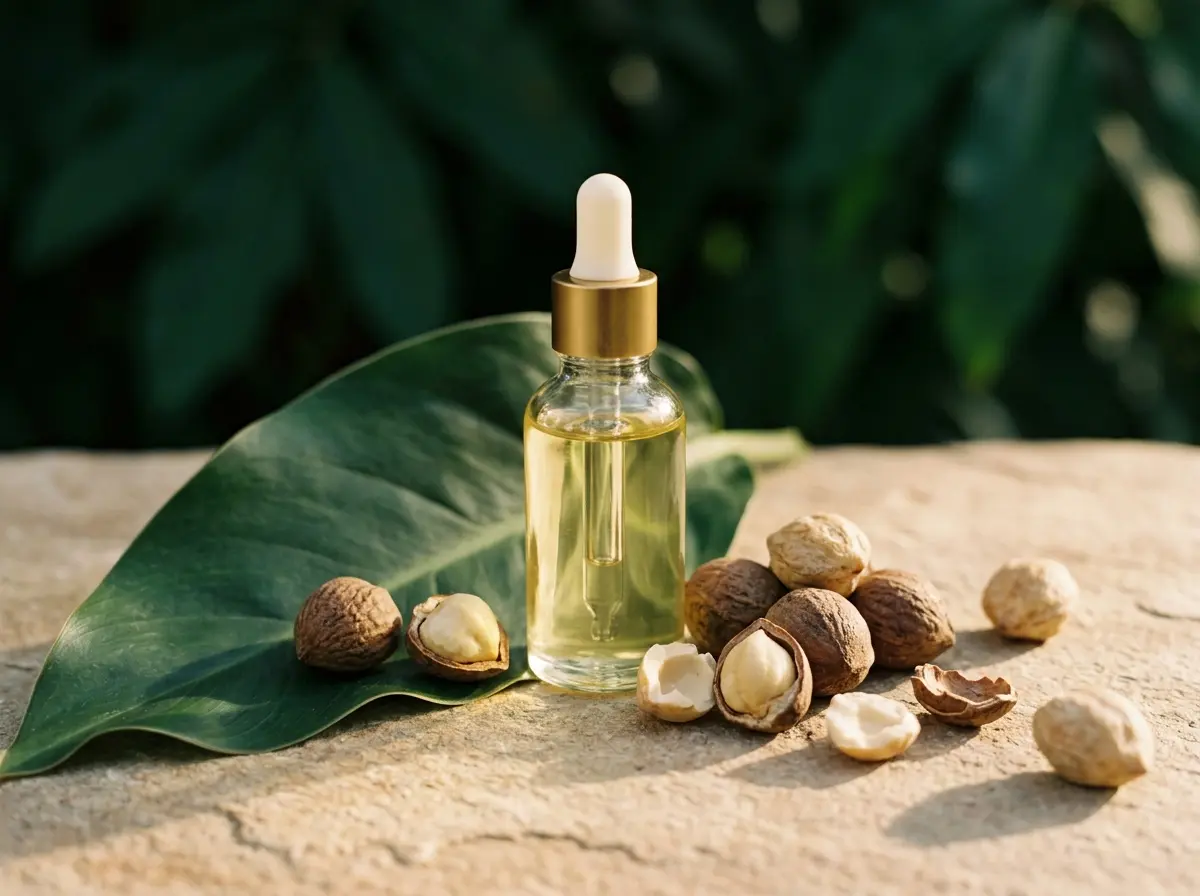
Kukui oil has been used in Hawaii for centuries. The indigenous Hawaiian people used it to protect and moisturise skin in the tropical climate, to care for hair and to treat minor skin conditions. Today it appears in serums, body oils, hair products and suncare formulations worldwide.
But what exactly is in the oil, and does it actually do what it claims?
What is the kukui tree?
Kukui oil is pressed from the seeds of the Aleurites moluccana, commonly called the candlenut tree. The tree grows across Southeast Asia, Polynesia and Hawaii, and its seeds have a very high oil content: roughly 55 to 65 percent by weight.
The Hawaiian name “kukui” means light, the nuts were historically burned as candles, which is where the English name candlenut comes from. In 1959 the kukui tree was designated the official state tree of Hawaii.
Botanically, Aleurites moluccana belongs to the Euphorbiaceae family, not the rosaceae family that includes most common tree nuts. This distinction matters for people with nut allergies, though it does not automatically make the oil safe for everyone with a nut sensitivity.
On cosmetic ingredient lists you will find it listed as Aleurites Moluccana Seed Oil or Kukui Nut Oil.
What does kukui oil contain?
The oil’s composition is what makes it interesting for skin and hair care.
| Fatty acid | Approx. % | Type |
|---|---|---|
| Linoleic acid (C18:2) | 40-45% | Polyunsaturated omega-6 |
| Alpha-linolenic acid (C18:3) | 28-35% | Polyunsaturated omega-3 |
| Oleic acid (C18:1) | 17-22% | Monounsaturated omega-9 |
| Palmitic acid (C16:0) | 5-8% | Saturated |
The high concentration of polyunsaturated fatty acids, linoleic and alpha-linolenic acid together making up roughly 70 percent, gives kukui oil several properties that set it apart from heavier oils.
Kukui oil also contains natural vitamin E (tocopherols), which acts as an antioxidant and contributes to the oil’s skin-conditioning properties.
Why the fatty acid composition matters
Linoleic acid is a component of ceramides, the lipid molecules that make up the skin’s protective barrier. A skin barrier depleted of ceramides loses moisture faster and becomes more reactive to external irritants.
Research on topical application of linoleic acid-rich oils suggests that they may support the skin barrier and help retain moisture, particularly in dry or damaged skin. Alpha-linolenic acid has similar properties and is also an essential fatty acid the body cannot produce itself.
Because kukui oil is rich in both, it has a genuinely useful role in skin care, not as a treatment for conditions, but as a barrier-supporting ingredient.
The oil’s polyunsaturated composition also makes it lighter in texture than oleic-acid-dominant oils like olive oil or argan oil. It absorbs quickly and leaves no heavy residue.
What kukui oil does not do
Kukui oil will not treat eczema, psoriasis, acne or any other diagnosed skin condition. It does not have clinical evidence as a therapeutic agent.
It will not replace sunscreen. It does not provide meaningful UV protection.
It will not work equally well for everyone. People with very oily or congested skin may find any facial oil too much, regardless of composition.
How to use it
On skin: Apply two to three drops to slightly damp skin after cleansing. The oil absorbs within a few minutes. It can be used on the face, body and hands. If you are new to face oils, apply it only at night initially to see how your skin responds.
On hair: One to two drops worked between the palms and smoothed over the lengths and ends. Works on dry hair as a finishing oil or on damp hair before styling.
Patch test: Always test a small amount on the inside of your wrist or elbow first and wait 24 hours before wider use. This applies especially if you have known allergies.
Choosing a quality kukui oil
Look for cold-pressed kukui oil in a dark glass bottle. Cold-pressing preserves the natural fatty acids and vitamins. Dark glass protects the oil from light-induced oxidation.
Avoid kukui oil in clear plastic bottles, the oil degrades faster. Check the shelf life: kukui oil typically lasts 12 to 18 months unopened, or 6 to 12 months after opening.
On the ingredient list of a product, “Aleurites Moluccana Seed Oil” should appear near the top if kukui oil is meant to be an active ingredient, not just a trace addition.
Summary
Kukui oil is a light, fast-absorbing plant oil with a high concentration of linoleic acid and alpha-linolenic acid. These fatty acids support the skin barrier and help retain moisture. The oil works on both skin and hair, suits most skin types and does not leave a heavy residue.
It will not cure skin conditions, but as a barrier-supporting ingredient it earns its place in a routine.
Frequently asked questions
What is kukui oil made from?
Kukui oil is cold-pressed from the seeds of the Aleurites moluccana tree, also known as the candlenut tree. The tree is native to Southeast Asia and the Pacific and is the official state tree of Hawaii.
Is kukui oil good for all skin types?
Kukui oil suits most skin types well because of its lightweight texture and high linoleic acid content. It is particularly useful for dry, sensitive and combination skin. People with very oily or acne-prone skin should patch-test first and use small amounts.
How does kukui oil compare to argan oil?
Both are lightweight plant oils, but kukui oil has a higher concentration of linoleic acid (omega-6) than argan oil, which is richer in oleic acid. Linoleic acid is more beneficial for the skin barrier and for acne-prone skin. Argan oil leaves a slightly richer feel on the skin.
Can you use kukui oil on your hair as well as your skin?
Yes. Kukui oil is used on both skin and hair. On hair it works as a lightweight finishing oil that adds shine and reduces frizz without weighing hair down. It is particularly suitable for fine or straight hair that easily becomes greasy with heavier oils.