Kukui oil vs marula oil: which skin oil should you choose?
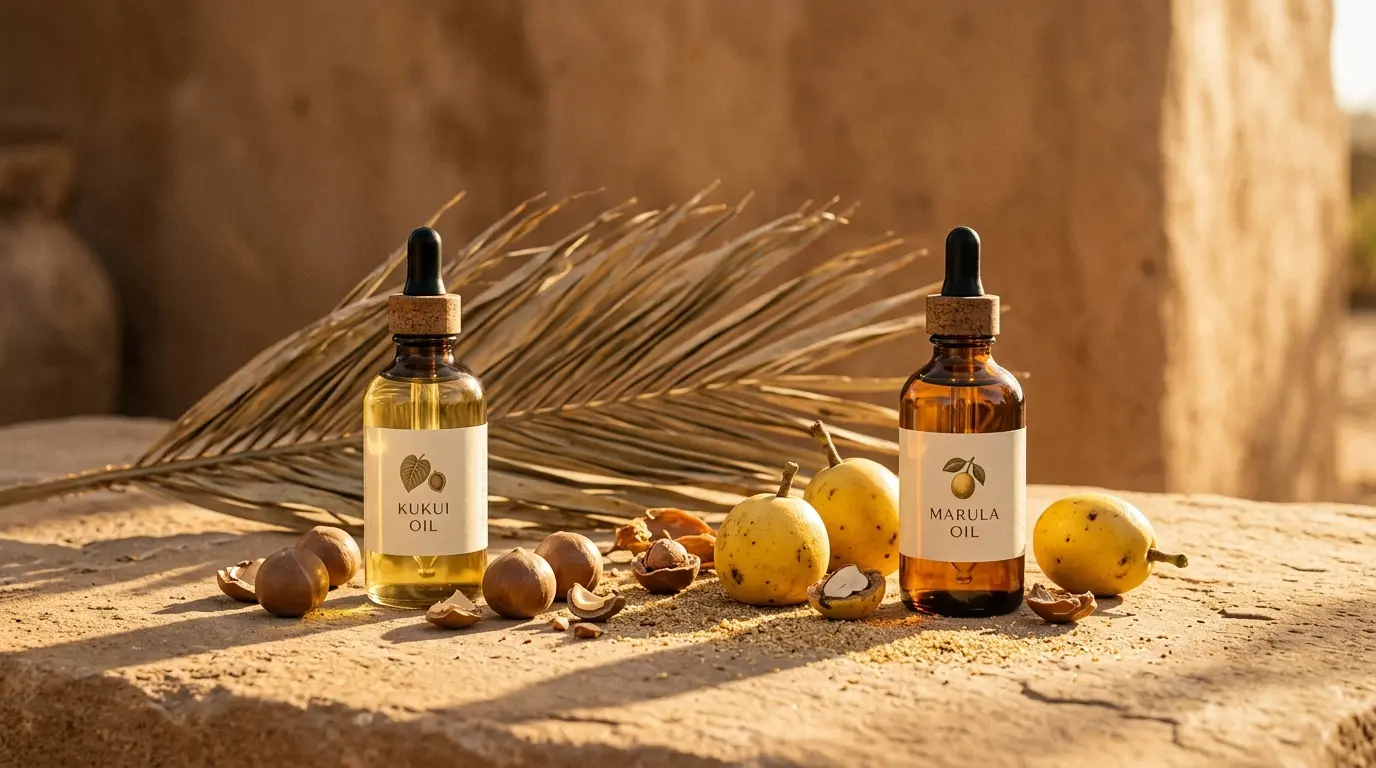
Two luxury plant oils from different continents. Kukui oil from Hawaii, marula oil from southern Africa. Both are premium, both are popular, but they have very different fatty acid profiles. Here is what actually matters.
Quick overview
| Property | Kukui oil | Marula oil |
|---|---|---|
| Origin | Hawaii, Asia | Southern Africa |
| Texture | Very light, dry | Medium, nourishing |
| Absorption | Fast | Moderate |
| Comedogenicity | 2/5 | 3–4/5 |
| Shelf life | 12–18 months | 18–24 months |
| Price | $$$ | $$$ |
| Best for | Sensitive, irritated skin | Dry, mature skin |
Origin and production
Kukui oil comes from the kukui tree (Aleurites moluccana) and has been used in Hawaiian medicine for centuries. More about kukui oil
Marula oil is extracted from the fruits of the marula tree (Sclerocarya birrea), which grows wild in southern Africa. The oil is an important export product for local communities in Namibia and South Africa.
Note: The marula tree is also called the “elephant tree” because elephants love its ripe fruit. The nuts are cold-pressed after harvest to produce the cosmetic oil.
Fatty acid comparison
| Fatty acid | Kukui oil | Marula oil | Effect |
|---|---|---|---|
| Oleic acid (omega-9) | 5–8% | 70–78% | Hydration, suppleness |
| Linoleic acid (omega-6) | 42–44% | 4–7% | Strengthens skin barrier |
| Alpha-linolenic acid (omega-3) | 28–30% | 0–0.5% | Anti-inflammatory |
| Palmitic acid | 5–8% | 9–12% | Protective |
| Vitamin C | Absent | High | Antioxidant |
| Vitamin E | Low | High | Antioxidant |
The difference is fundamental. Marula oil is about three-quarters oleic acid. Kukui oil is about three-quarters essential fatty acids (linoleic + alpha-linolenic). Marula hydrates and protects. Kukui repairs and calms.
Skin: which type benefits from which oil?
Dry and mature skin
Marula oil is one of the richest oils in oleic acid. This makes skin more supple and helps active ingredients penetrate more deeply. Combined with its high vitamin E content, marula is excellent for mature skin.
Winner: marula oil.
Sensitive and eczema-prone skin
Kukui oil wins thanks to its high omega-3 content with proven anti-inflammatory effects.
Winner: kukui oil.
Oily and acne-prone skin
Neither is ideal, but kukui oil with a comedogenicity rating of 2 is safer than marula oil (rating 3–4). For oily skin, both are suboptimal. Jojoba or squalane are better choices.
Winner: kukui oil (but jojoba is better).
Texture and use
Marula oil feels richer and more nourishing than kukui oil. It has a soft yellow color and a mild, nutty scent. Kukui oil is drier, lighter, and nearly odorless.
Tip: Use marula oil in the evening as a nourishing night serum. Kukui oil works better during the day thanks to its dry texture that does not leave a shine.
Price and availability
Both are premium oils in the same price range. Marula oil is slightly easier to find thanks to brands like Drunk Elephant, which use it as a core ingredient.
Pros and cons
Benefits of kukui oil compared to marula:
- Lighter, drier, absorbs faster
- Richer in essential fatty acids (omega-3, omega-6)
- Lower comedogenicity rating (2 vs 3–4)
- Better for inflamed or sensitive skin
Drawbacks of kukui oil compared to marula:
- Less nourishing for dry or mature skin
- Fewer antioxidants (vitamins C and E)
- Shorter shelf life
- Less brand recognition
Conclusion: which one should you choose?
Choose kukui oil if you:
- Have sensitive or irritated skin
- Want to repair your skin barrier
- Are looking for a light daytime oil
- Deal with eczema
Choose marula oil if you:
- Have dry or mature skin
- Want a rich night serum
- Need extra antioxidants
- Want deeper hydration
Curious how kukui oil compares to other oils? See all comparisons
Looking for the best kukui oil? View our comparison
The information on this page is for informational purposes only and does not replace medical advice. Consult a doctor or dermatologist for serious skin concerns.
Frequently asked questions
What is marula oil?
Marula oil is extracted from the nuts of the marula tree (Sclerocarya birrea), which grows wild in southern Africa. It is rich in oleic acid (70–78%) and contains high levels of antioxidants, including vitamins C and E.
Which oil is better for dry skin?
Marula oil is slightly more nourishing thanks to its high oleic acid content (70–78%). Kukui oil is lighter and works better for dry skin that is also sensitive.
Is marula oil comedogenic?
Marula oil has a comedogenicity rating of 3–4, higher than kukui oil (rating 2). For acne-prone skin, kukui is the safer choice.