Kukui Oil vs 10 Other Oils: How Does It Compare?
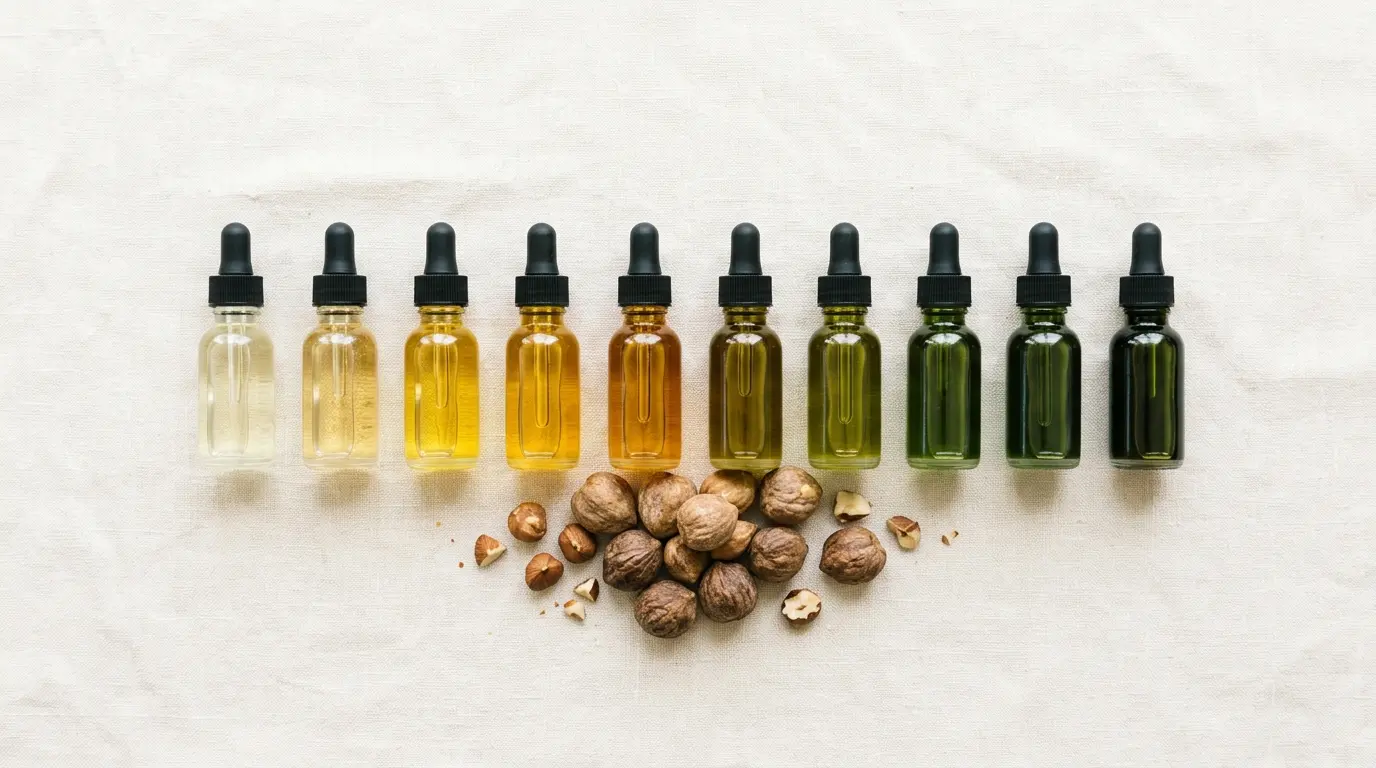
Kukui oil is a standout oil, but how does it compare to the other popular face oils? We put kukui next to 10 alternatives and compare on the things that matter: fatty acid profile, texture, comedogenicity, and suitability by skin type.
What Makes Kukui Oil Unique?
Kukui oil has two properties that no other common face oil combines:
- Highest omega-3 of all face oils (28-30% alpha-linolenic acid)
- High linoleic acid (42-44%) for barrier repair
This combination makes it the most anti-inflammatory plant oil available. More about what kukui oil is →
The Full Comparison Overview
| Oil | Texture | Comedogenicity | Best for | Price |
|---|---|---|---|---|
| Kukui | Very light | 2/5 | Sensitive, eczema | $$$ |
| Argan | Light | 0/5 | Dry, mature | $$ |
| Jojoba | Very light | 2/5 | Oily, all types | $$ |
| Coconut | Heavy | 4/5 | Body, hair | $ |
| Rosehip | Light-medium | 1/5 | Scars, aging | $$ |
| Squalane | Very light | 0-1/5 | Acne, all types | $$ |
| Marula | Medium | 3-4/5 | Dry, mature | $$$ |
| Almond | Light-medium | 2/5 | Massage, base | $ |
| Castor | Very heavy | 1/5 | Hair growth | $ |
| Tamanu | Medium | 2-3/5 | Scars, wounds | $$ |
| Tsubaki | Light, silky | 1-2/5 | Straight hair, aging | $$$ |
Kukui Oil Wins For…
Sensitive and Irritated Skin
No other oil on this list combines as much omega-3 with such a light texture. For eczema, rosacea, or chronically irritated skin, kukui is the first choice. Read more about kukui for eczema →
Skin Barrier Repair
The combination of linoleic acid (42%) and alpha-linolenic acid (29%) delivers exactly the building blocks your skin barrier needs. More about fatty acids and the skin →
Scrunching for Curls
The dry, light texture makes kukui oil the perfect scrunching oil. It gives definition and shine without weighing curls down. Learn the scrunching technique →
Other Oils Win For…
Anti-aging: Rosehip or Tsubaki
Rosehip oil delivers natural vitamin A for cell renewal. Tsubaki oil is the Japanese classic with 85% oleic acid for smooth, luminous skin.
Dry/Mature Skin: Argan or Marula
Oleic acid-rich oils hydrate more deeply. Argan (45% oleic acid) is the balanced choice, marula (75%) the most intensive.
Acne-Prone Skin: Squalane or Jojoba
Squalane (comedogenic 0) and jojoba (mimics sebum) are the safest options for those prone to clogged pores. See the complete comedogenicity list →
Hair Growth: Castor Oil
For lashes and brows, castor oil is unbeatable thanks to its unique ricinoleic acid.
Budget: Sweet Almond Oil
If you want an affordable base oil that works for most skin types, sweet almond oil is the best pick.
Tip: Not sure which oil suits you? Check out our skin type guide for personalized advice.
Combining Oils: The Best Mixes
You do not have to choose just one. Combinations often work better:
- Sensitive + hydration: kukui + squalane
- Anti-aging + calming: rosehip + kukui
- Dry + barrier repair: argan + kukui
- Budget all-rounder: almond oil + kukui (50/50)
Want to Dig Deeper?
See the full fatty acid profile of 20+ plant oils → for a detailed data table.
Want to know more about how fatty acids affect your skin? Read our guide on fatty acids →
Looking for the best kukui oil? See our comparison →
The information on this page is intended for informational purposes and does not replace medical advice. Consult a doctor or dermatologist for serious skin concerns.
Frequently asked questions
What makes kukui oil different from other oils?
Kukui oil has the highest omega-3 content (28-30%) of all common face oils, combined with high linoleic acid (42-44%). This unique combination makes it especially suited for sensitive, inflamed, and eczema-prone skin.
Is kukui oil better than argan oil?
Not necessarily better, but different. Kukui oil is lighter and better for sensitive skin thanks to omega-3. Argan oil is more nourishing for dry and mature skin thanks to oleic acid and vitamin E. The best choice depends on your skin type.
Which oil is most similar to kukui oil?
Hemp seed oil comes closest in fatty acid profile, with high linoleic acid (50-60%) and omega-3 (15-20%). Rosehip oil is another alternative with similar essential fatty acids.
Can I combine kukui oil with other oils?
Yes, and it is often a smart move. Kukui oil delivers essential fatty acids, while oils like squalane or argan add other benefits. Mix a few drops of each for a custom face oil.