Kukui oil vs tsubaki (camellia) oil: which one should you choose?
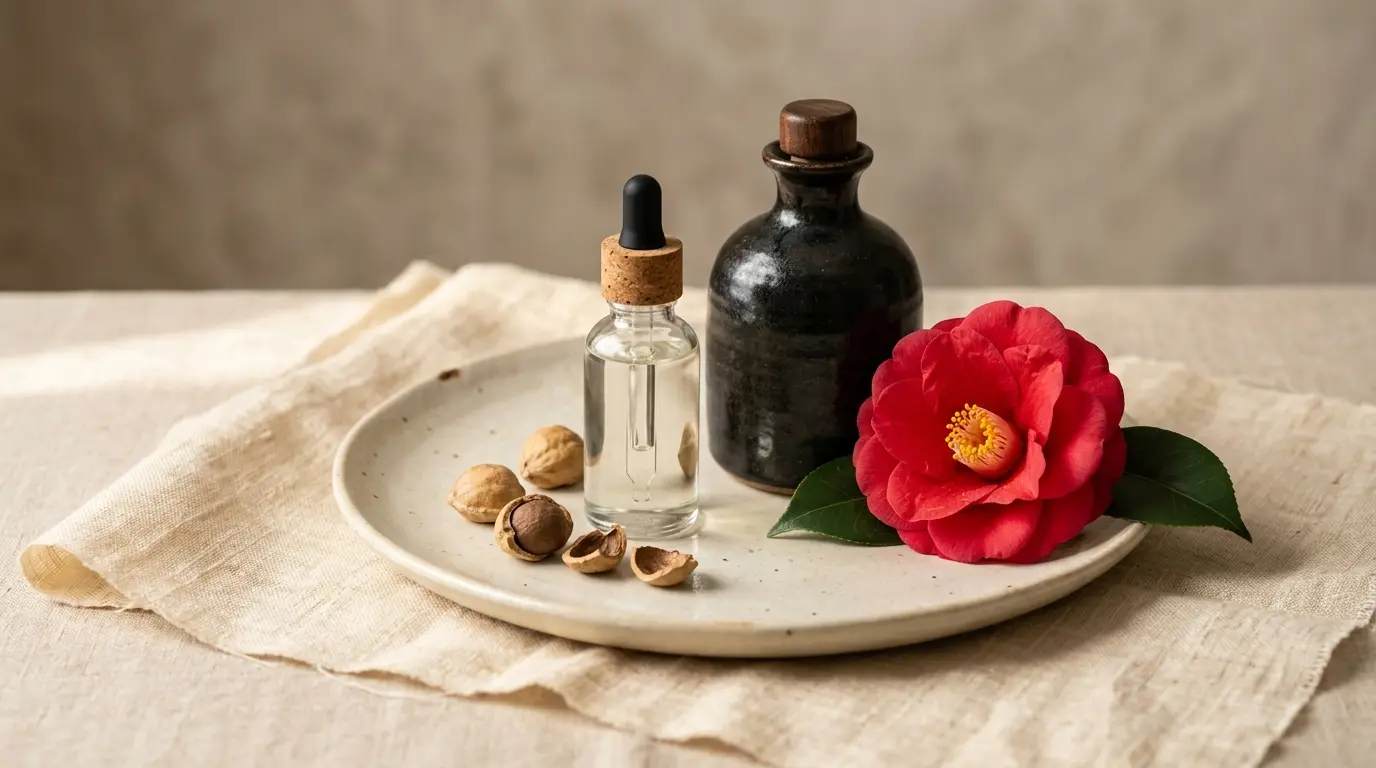
Two island oils with centuries of beauty tradition behind them. Kukui oil from Hawaii, tsubaki oil from Japan. Both have been used for generations on skin and hair, but their fatty acid profiles are almost complete opposites.
Quick overview
| Property | Kukui oil | Tsubaki oil |
|---|---|---|
| Origin | Hawaii, Asia | Japan |
| Texture | Very light, dry | Light, silky |
| Absorption | Fast | Fast to moderate |
| Comedogenicity | 2/5 | 1–2/5 |
| Shelf life | 12–18 months | 18–24 months |
| Price | $$$ | $$$ |
| Best for | Sensitive skin, curls | Straight hair, anti-aging |
Origin and production
Kukui oil comes from the kukui nut (Aleurites moluccana), the state tree of Hawaii. The oil is deeply rooted in Hawaiian culture. More about kukui oil
Tsubaki oil is extracted from the seeds of Camellia japonica, the Japanese rose. In Japan, the oil has been used since the Heian period (794–1185) by geishas for their signature lustrous hair.
Note: On the Japanese island of Oshima, known as the “camellia island,” tsubaki oil is still pressed by hand using traditional methods. The oil is so tied to local culture that an annual camellia festival is held there.
Fatty acid comparison
| Fatty acid | Kukui oil | Tsubaki oil | Effect |
|---|---|---|---|
| Oleic acid (omega-9) | 5–8% | 78–87% | Hydration, suppleness |
| Linoleic acid (omega-6) | 42–44% | 5–10% | Skin barrier support |
| Alpha-linolenic acid (omega-3) | 28–30% | 0–1% | Anti-inflammatory |
| Palmitic acid | 5–8% | 8–10% | Protective |
The contrast is striking. Tsubaki oil is almost 85% oleic acid. Kukui oil is less than 10% oleic acid. Kukui oil is dominant in essential fatty acids where tsubaki is not.
Hair: where the real difference shows
Straight and fine hair
Tsubaki oil is the clear favorite here. Oleic acid coats the hair shaft with an invisible film that delivers intense shine without weighing hair down. Geishas used it for their signature mirror-like finish.
Winner: tsubaki oil.
Curly hair (scrunching)
Kukui oil is more popular in the curly hair community as a scrunching oil. Its dry texture defines curls without making them sticky or heavy. More about kukui oil for hair
Winner: kukui oil.
Anti-frizz
Both work against frizz, but in different ways. Tsubaki coats the hair shaft (oleic acid). Kukui nourishes the hair from within (essential fatty acids).
Winner: tie - depends on your hair type.
Skin: which type benefits from which oil?
Sensitive skin
Kukui oil wins with its high omega-3 content for a calming, anti-inflammatory effect.
Winner: kukui oil.
Mature skin
Tsubaki oil is one of the most valued anti-aging oils in Japanese skin care. Its high oleic acid content makes skin more supple and helps active ingredients penetrate more deeply.
Winner: tsubaki oil.
Pros and cons
Benefits of kukui oil compared to tsubaki:
- Richer in omega-3 and omega-6
- Better for sensitive and eczema-prone skin
- More popular for curly hair
- Drier texture, absorbs faster
Drawbacks of kukui oil compared to tsubaki:
- Less suitable for straight hair
- Less oleic acid (less anti-aging effect)
- Shorter shelf life
- Less cultural prestige in the beauty industry
Conclusion: which one should you choose?
Choose kukui oil if you:
- Have sensitive or irritated skin
- Have curly hair
- Want to repair your skin barrier
Choose tsubaki oil if you:
- Want to add shine to straight or fine hair
- Want to care for mature skin
- Want to experience a luxury Japanese beauty tradition
Curious how kukui oil compares to other oils? See all comparisons
Looking for the best kukui oil? View our comparison
The information on this page is for informational purposes only and does not replace medical advice. Consult a doctor or dermatologist for serious skin concerns.
Frequently asked questions
What is tsubaki oil?
Tsubaki oil, also known as camellia oil, is extracted from the seeds of the Camellia japonica plant. It has been a Japanese beauty secret for centuries, especially popular for giving hair a glossy, silky finish.
Which oil is better for hair?
Tsubaki oil is traditionally the favorite for hair, especially for straight and fine hair. It delivers intense shine without weighing hair down. Kukui oil is more popular in the curly hair community as a scrunching oil.
Is tsubaki oil comedogenic?
Tsubaki oil has a comedogenicity rating of 1–2, similar to kukui oil (rating 2). Both are suitable for use on the face.