Oil for Scars: What Works and What to Realistically Expect
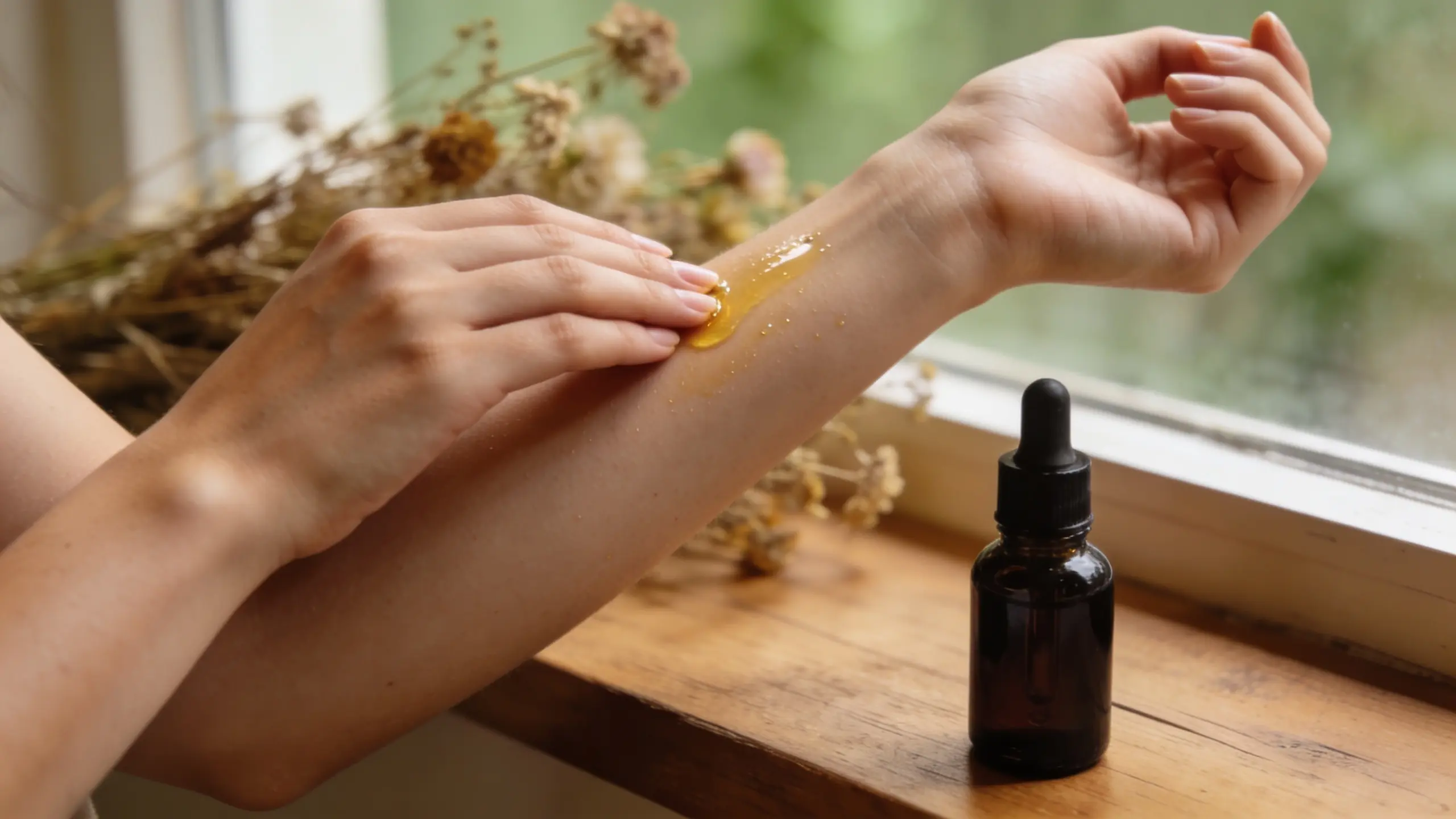
If you have a scar, you want to do something about it. That is understandable. There are countless oils that promise to help, and the choice is overwhelming. But what actually works, and what can you honestly expect?
This article explains how oil works on scars, which oils have the most evidence behind them, and how to use them.
What Oil Can Do - and What It Cannot
The first thing I want to be honest about: oil does not remove scars. Scar tissue is connective tissue your body creates in response to damage, and that is permanent.
What oil can do:
- Hydrate the skin around and on the scar
- Improve skin elasticity
- Soften the texture of the scar
- Reduce inflammation and support healing in fresh scars
- Make the scar less noticeable over time
That is not nothing. But do not expect a miracle. Anyone who promises you that is exaggerating.
Which Oils Have the Best Evidence?
Rosehip oil
Rosehip oil is the most studied oil for scars. It contains high levels of retinol-like compounds (vitamin A), linoleic acid, and other fatty acids that stimulate cell renewal and make skin more supple.
A small clinical study showed that rosehip oil made post-surgical scars less red and less raised with regular use. The evidence base is modest, but the results are consistent.
Tamanu oil
Tamanu oil has proven anti-inflammatory and wound-healing properties. It contains calophyllolide, a compound that reduces inflammation and stimulates skin regeneration.
It is a good choice for fresh or relatively recent scars, and for scars that are still slightly red or raised. Tamanu has a thicker texture than kukui or rosehip.
Kukui oil
Kukui oil has no direct clinical studies for scars, but its composition makes it useful as a supporting oil. It is lightweight, absorbs quickly, and does not clog pores. The high linoleic acid content helps strengthen the skin barrier.
From a practical standpoint, kukui oil is easy to work with: you can massage it in without it feeling sticky.
Calendula oil
Calendula (marigold) has soothing and wound-healing properties. It is gentle for sensitive skin and works well for scars that still feel tender.
How to Use Oil on Scars
Wait until the wound is fully closed. Never apply oil to an open wound.
Apply a small amount of oil and massage it gently into the scar for five to ten minutes. The massage is at least as important as the oil itself: it breaks down scar tissue more gently and stimulates circulation.
Do this twice a day, morning and evening. Consistent use over at least two to three months gives the best results.
Fresh scars respond better than old ones. Start as early as possible (once the skin is closed) for the most effect.
A Practical Step-by-Step Plan
- Wait until the skin is fully closed.
- Choose rosehip oil for older or post-surgical scars, tamanu for fresh or inflamed scars, and kukui as a light supporting oil.
- Apply daily and massage for at least five minutes.
- Protect the scar during the day with sunscreen - UV radiation makes scars darker.
- Be patient: allow at least eight to twelve weeks for visible results.
What Does Sunscreen Have to Do With It?
Many people forget this, but UV light is one of the biggest factors that makes scars darker and more noticeable. Especially for fresh scars, daily sunscreen is a must - even in winter.
Oil works as support, but sun protection is equally important.
In Summary
Oil can make a scar softer, more supple, and less noticeable - but it will not remove it. Rosehip oil has the strongest evidence, tamanu works well for fresh scars, and kukui oil is a good addition because of its lightweight texture.
Consistent use and proper massage matter more than which exact oil you choose. See a dermatologist if your scars are large, painful, or stay significantly raised.
Frequently asked questions
Can oil remove scars?
No. Oil cannot remove scars. Scar tissue is connective tissue your body creates in response to damage, and it is permanent. What oil can do: hydrate the skin around and on the scar, improve elasticity, soften the texture of the scar, and make it less noticeable over time. Set your expectations realistically.
Which oil is best for scars?
Rosehip oil has the most research support for use on scars, mainly because of its high vitamin A and linoleic acid content. Tamanu oil is good for fresh scars due to its anti-inflammatory properties. Kukui oil works as a supporting oil: lightweight, well-absorbing, and non-comedogenic.
How long does it take to see results?
Expect a minimum of 8 to 12 weeks of consistent use before you see a noticeable improvement. Fresh scars respond better than old ones. Patience is the key word with any oil treatment for scars.
Can I use oil on fresh scars?
Wait until the skin is fully closed and there is no longer an open wound. Then start with a gentle oil like kukui or rosehip. If in doubt, check with your doctor or dermatologist.