Cold-Pressed Oil: What It Means and Why It Matters
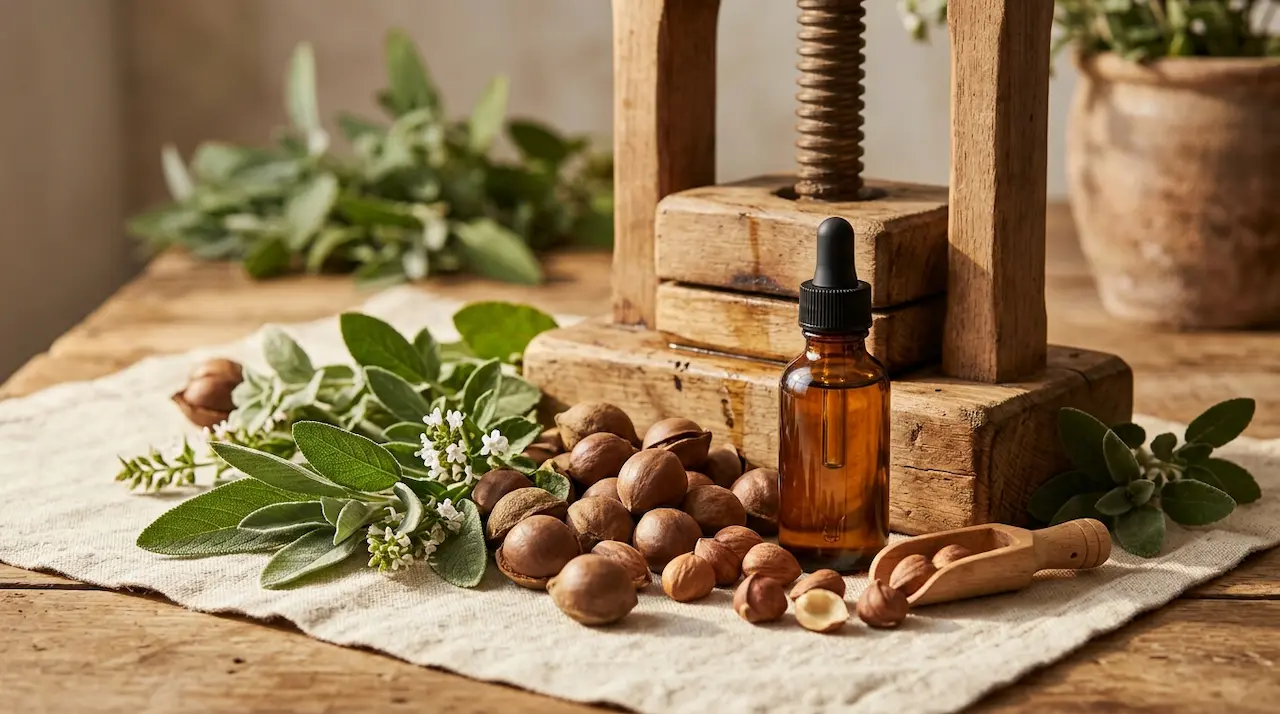
Every quality oil bottle carries the label: cold-pressed. But what does that actually mean, and does it really make a difference for your skin? If you use kukui oil or other plant-based oils in your skin care routine, it is worth understanding how the oil was made. That largely determines what you are putting on your skin.
What Does Cold-Pressed Mean?
Cold pressing extracts oil mechanically from seeds, nuts, or fruits, without added heat or chemical solvents. The temperature stays below 49 degrees Celsius throughout the process, though the exact limit depends on the standard used.
The low temperature keeps the naturally occurring nutrients largely intact. Think fatty acids, vitamin E, antioxidants, and other bioactive compounds found in the plant. Those compounds are exactly what your skin needs.
The result is an oil that sometimes has a distinct color, scent, or taste, that is a sign that little was lost during production.
The Difference: Cold-Pressed vs Refined
Refined oil is processed further after pressing. This can involve heating to high temperatures, bleaching, deodorizing, or using chemical solvents like hexane. The end product is often colorless, odorless, and has a longer shelf life.
That sounds convenient, but there is a cost: a large portion of the active compounds is lost in the process.
| Property | Cold-pressed | Refined |
|---|---|---|
| Production method | Mechanical, low temperature | Heat and/or chemical treatment |
| Nutrients | Mostly intact | Mostly destroyed |
| Color and scent | Natural, plant-like | Pale, neutral |
| Shelf life | Shorter (more prone to oxidation) | Longer |
| Suitable for skin | Excellent | Less effective |
| Price | Higher | Lower |
Why Is Cold-Pressed Better for Your Skin?
Note: Vitamin E (tocopherol) is one of the most important antioxidants in plant oils. Refining can destroy up to 80% of the naturally present vitamin E. Vitamin E helps protect skin from oxidative stress and supports skin barrier repair.
The strength of a plant oil lies in the combination of compounds naturally found in the plant. Fatty acids, sterols, polyphenols, and vitamins work together to nourish, protect, and calm the skin.
Cold pressing preserves most of that complex composition. That makes cold-pressed oil significantly more effective than its refined counterpart, even though both come from the same raw material.
For people with dry, sensitive, or damaged skin that difference is especially noticeable. The intact fatty acids match the composition of your own skin lipids more closely and support the skin barrier in a way that refined oil cannot.
How to Recognize It on the Label
Not every manufacturer is equally transparent, but there are a few terms to look for. “Cold-pressed” is the most direct indication. Terms like “virgin” or “extra virgin” generally point to minimal processing, though these terms are less strictly regulated for cosmetic oils than for olive oil.
Words like “refined”, “bleached”, or “deodorized” signal that the oil has been heavily processed. “Expeller-pressed” also means mechanically pressed, but without a temperature limit, so the oil can get warmer during pressing than true cold pressing allows.
Also look at the color in the bottle. A pale yellow or colorless oil that claims to be natural deserves a closer look.
Popular Cold-Pressed Oils in Skin Care
There are dozens of plant oils on the market. Below are some of the most widely used cold-pressed oils, their best skin type match, and their most notable quality.
| Oil | Best skin type | Notable quality |
|---|---|---|
| Kukui oil | All skin types, including sensitive | Light texture, high penetration, rich in linoleic and alpha-linolenic acid |
| Argan oil | Normal to dry | Rich in vitamin E and oleic acid, protective and antioxidant |
| Jojoba oil | All skin types, acne-prone | Technically a liquid wax, very stable, non-comedogenic |
| Rosehip oil | Mature skin, scars, dark spots | High polyunsaturated fatty acids, rich in beta-carotene |
More about how these oils compare to each other is covered in our guides on kukui oil vs argan oil and kukui oil vs jojoba oil.
Storage and Shelf Life
Cold-pressed oils are richer in unsaturated fatty acids than refined versions, and that makes them more sensitive to oxidation. Light, heat, and air are the enemies of a good oil.
Always store your cold-pressed oil in a dark, tightly sealed bottle, away from direct sunlight and heat sources. A cool cabinet or the refrigerator is ideal, especially for oils with a high polyunsaturated fatty acid content like rosehip or kukui oil.
Always use dry, clean hands or a pipette to dispense oil. Moisture in the bottle speeds up spoilage. An oxidized oil smells rancid, trust your nose and throw out a suspect oil rather than using it on your skin.
Frequently asked questions
Is cold-pressed oil always better?
Not necessarily. For skin care, cold-pressed is almost always the better choice because the active compounds stay intact. But for some uses, like high-heat cooking, refined oil is more stable. In cosmetic products, cold-pressed is almost always the right call.
What does unrefined mean?
Unrefined means the oil was not further processed with chemicals or heat to remove color, scent, or impurities after pressing. Unrefined and cold-pressed often go hand in hand, but they are not the same thing. An oil can be cold-pressed and still lightly refined afterward.
How long does cold-pressed oil last?
Shelf life varies by oil type, but cold-pressed oils typically last 6 to 24 months after opening. Always store in a cool, dark place with the cap tightly closed. Oils high in polyunsaturated fatty acids, like rosehip oil, are more sensitive to oxidation and do not last as long as more stable oils.