Kukui Oil vs Argan Oil: Which One Should You Choose?
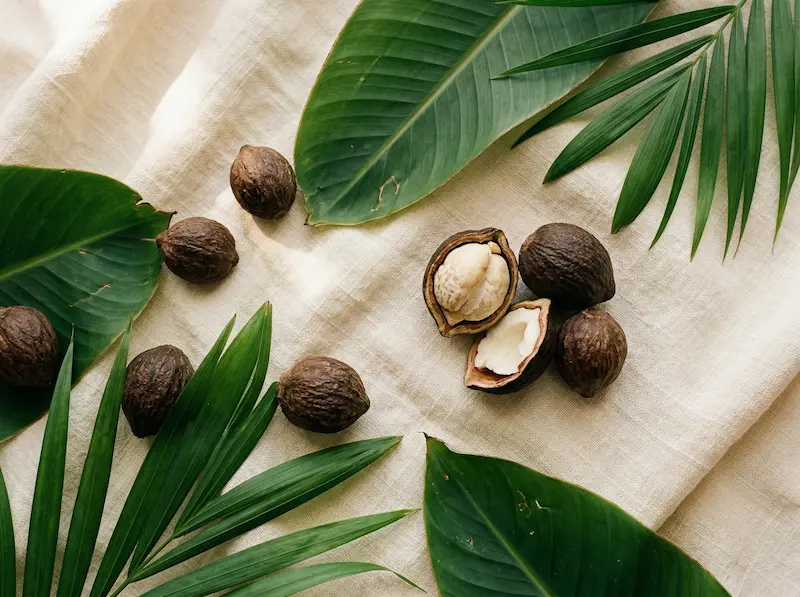
Two of the most popular plant-based skin oils, but which one fits you best? We compare kukui oil and argan oil on composition, texture, use for skin and hair, and price.
Quick overview
| Property | Kukui oil | Argan oil |
|---|---|---|
| Origin | Hawaii, Asia | Morocco |
| Texture | Very light, dry | Light |
| Absorption | Fast | Fast to moderate |
| Comedogenicity | 2/5 | 0/5 |
| Shelf life | 12-18 months | 18-24 months |
| Price | $$$ | $$ |
| Best for | Sensitive, dry, eczema skin | Dry, mature skin, damaged hair |
Origin and production
Kukui oil is pressed from the nuts of the kukui tree (Aleurites moluccana), the state tree of Hawaii. The nuts are cold-pressed to extract the oil. More about the origin of kukui oil
Argan oil comes from the fruit of the argan tree (Argania spinosa), which grows almost exclusively in southern Morocco. Traditionally, the oil is produced by women from Berber communities. Cold-pressed, organic argan oil is the highest quality.
Note: Argan oil is sometimes called the “liquid gold” of Morocco. The argan tree is on the UNESCO intangible heritage list and plays a key role in the local economy and ecology.
Composition compared
The biggest differences are in the fatty acid profile:
| Fatty acid | Kukui oil | Argan oil | Effect |
|---|---|---|---|
| Linoleic acid (omega-6) | 42-44% | 29-36% | Strengthens skin barrier |
| Alpha-linolenic acid (omega-3) | 28-30% | 0-1% | Anti-inflammatory |
| Oleic acid (omega-9) | 5-8% | 43-49% | Hydration, suppleness |
| Vitamin E (tocopherols) | Low | High (620-900 mg/kg) | Antioxidant |
The most striking difference: kukui oil is high in alpha-linolenic acid (omega-3), while argan oil contains almost none. Argan oil, on the other hand, is richer in oleic acid and vitamin E.
Note: Oleic acid (omega-9) makes cell membranes more supple and helps other active ingredients penetrate deeper into the skin. This makes argan oil an ideal base for mature skin.
Skin: which type benefits from which oil?
Dry and sensitive skin
Both oils suit dry skin, but for different reasons. Kukui oil has a stronger calming effect on irritated or sensitive skin because of its high omega-3 content. Argan oil hydrates more deeply thanks to oleic acid.
Winner: depends on the cause. Sensitivity and irritation? Kukui. Simply dry? Both work.
Oily and combination skin
Kukui oil has a comedogenicity score of 2; argan oil scores 0, the lowest possible. Argan oil is therefore theoretically safer for oily or acne-prone skin.
Winner: argan oil.
Mature skin
Oleic acid, which argan oil is packed with, helps keep skin supple. Combined with its high vitamin E content, argan oil is an excellent choice for mature skin.
Winner: argan oil.
Eczema and psoriasis
Kukui oil’s high alpha-linolenic acid content gives it a clear advantage for skin with eczema or psoriasis. This omega-3 fatty acid reduces inflammatory processes in the skin. Read more about kukui oil for eczema
Winner: kukui oil.
Hair: which oil for which use?
Scrunching and curly hair
Kukui oil is popular in the curly hair community as a scrunching oil. Its dry, light texture adds shine and definition without weighing hair down or making it greasy. More about kukui oil for curly hair
Dry and damaged hair
Argan oil has been known for years as the ultimate treatment for dry, damaged, or frizzy hair. Its high oleic acid and vitamin E content repairs the hair shaft and adds shine.
Anti-frizz
Both oils work well against frizz, but argan has a slight edge for coarse hair because of its higher oleic acid content. A few drops of argan oil on dry hair tames frizz effectively.
Tip: Combine both: use kukui oil on damp hair as a scrunching oil for curl definition, then work one drop of argan oil through the ends as a finishing touch against frizz.
Texture and use
Kukui oil has a drier texture and absorbs noticeably faster than argan oil. Argan feels slightly richer, though both oils are considered “light” compared to heavier oils like coconut oil.
For the face: use 2-4 drops, applied to slightly damp skin after toner or serum.
Price and availability
Argan oil is easier to find and generally cheaper than kukui oil. This is because argan is produced on a larger scale. Kukui oil is more of a niche product and therefore more expensive.
When buying either oil, look for:
- Cold-pressed
- Unrefined
- 100% pure - no additives
Benefits and drawbacks
Benefits of kukui oil compared to argan:
- Richer in omega-3 (anti-inflammatory)
- Drier and lighter texture
- Better for eczema and sensitive skin
- Popular scrunching oil for curls
Drawbacks of kukui oil compared to argan:
- More expensive and harder to find
- Shorter shelf life
- Slightly higher comedogenicity score (2 vs 0)
- Less vitamin E
Conclusion: when to choose which?
Choose kukui oil if you:
- Have eczema, psoriasis, or irritated skin
- Have curly hair and want a scrunching oil
- Want an extremely light, dry skin oil
Choose argan oil if you:
- Have mature or dry skin
- Want to repair damaged or frizzy hair
- Want a lower comedogenicity risk
- Want to spend less
Want to know how kukui oil compares to jojoba oil? Read our comparison: kukui oil vs jojoba oil
Curious how kukui oil stacks up against other oils? See all comparisons
Looking for the best kukui oil? See our top picks
The information on this page is for informational purposes only and is not a substitute for medical advice. Consult a doctor or dermatologist for serious skin conditions.
Frequently asked questions
What is the difference between kukui oil and argan oil?
Kukui oil is richer in omega-3 (alpha-linolenic acid, 28-30%) and has a drier texture than argan oil. Argan oil contains more oleic acid (43-49%) and vitamin E tocopherols and feels slightly heavier. Kukui works better for sensitive and inflamed skin; argan works better for dry and mature skin.
Which oil is better for eczema, kukui or argan?
Kukui oil is the preferred choice for eczema and a damaged skin barrier, thanks to its high concentration of alpha-linolenic acid (omega-3) with anti-inflammatory properties. Argan oil is also soothing, but contains much less of this specific fatty acid.
Is kukui oil or argan oil better for hair?
Argan oil is known as the top hair treatment for dry, damaged, or frizzy hair thanks to its high oleic acid content and vitamin E. Kukui oil is more popular as a scrunching oil for curly hair. Both are excellent, but for different purposes.
Which oil is cheaper, kukui or argan?
Argan oil is generally cheaper and easier to find than kukui oil. Argan is produced on a large scale in Morocco, while kukui comes mainly from Hawaii and Asia.