How to Determine Your Skin Type: A Simple 3-Step Test
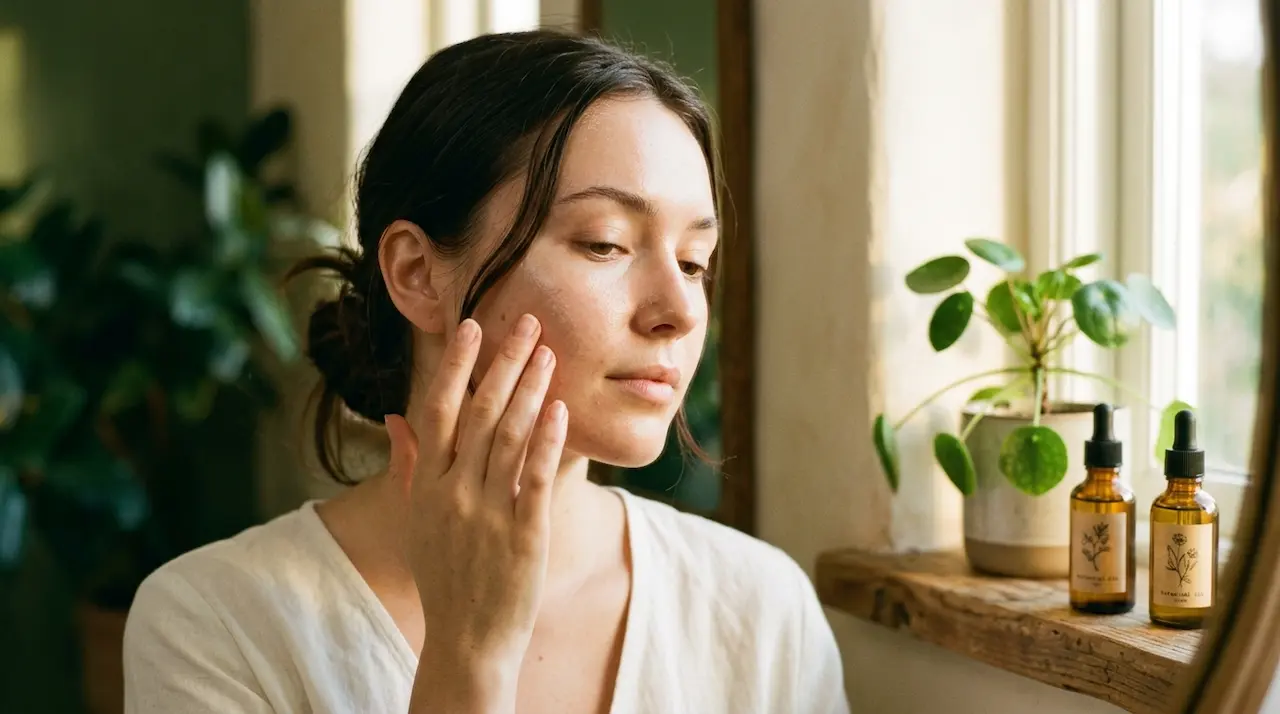
You are standing in a store, reading a label, and thinking: is this actually for me? Or you are at home with three tubes and a bottle you bought because “it sounded good,” and your skin still does not feel quite right.
Sound familiar? There is a good chance you do not really know your skin type, and that is more common than you think.
The confusion grows if you have received advice that did not match. One time you heard you have dry skin, another time that you are using too harsh a cleanser which is making your skin dry out. Who is right?
Maybe both. But you only understand that once you know how your own skin works.
Take the skin profile quiz: which oil suits you? →There Is No “Wrong” Skin Type
Before you take the test: your skin type is not something you caused, and it is not something you need to “fix.” It is simply the way your skin produces sebum, holds moisture, and responds to its environment.
Knowing your skin type helps you choose products that actually work, instead of guessing every time.
The Four Skin Types at a Glance
There are four basic types. Sensitivity is not a separate skin type, it is a condition that can occur with any type.
| Skin Type | Characteristics | Sebum Production |
|---|---|---|
| Normal | Few imperfections, comfortable feel, slight glow | Balanced |
| Dry | Tight, sometimes flaky, matte appearance, pores barely visible | Low |
| Oily | Shiny, enlarged pores, prone to blackheads and breakouts | High |
| Combination | T-zone shines (nose, forehead, chin), cheeks dry or normal | Mixed |
Note: Skin type and skin condition are not the same thing. Your skin type is inherited and relatively stable. A condition, like dehydration, redness, or sensitivity, is temporary and can occur with any skin type. This distinction matters: oily skin can also be dehydrated.
Test Your Skin Type: The Wash Test
The most reliable way to determine your skin type is the wash test. You need about an hour and nothing else.
Step 1 - Wash your face Wash your face with a gentle cleanser and pat it dry. Do not apply anything after, no toner, no serum, no cream.
Step 2 - Wait an hour Let your skin do its thing for an hour. Go do something else. Do not touch your face.
Step 3 - Observe
Use a thin tissue or just your hands and check each zone:
- Forehead
- Nose and chin (T-zone)
- Cheeks
Look at what you see and feel:
| What you notice | Likely skin type |
|---|---|
| Tight all over, sometimes flaky, no shine | Dry |
| Shiny all over, visible pores, maybe some blackheads | Oily |
| T-zone shines, cheeks feel normal or dry | Combination |
| Little shine, no tightness, comfortable | Normal |
Note: Do not take the test on a day you have been outside for a long time, just worked out, or are very stressed. Heat, sweat, and stress temporarily affect sebum production. A calm, deliberate morning at home gives the most reliable result.
Read Your Skin Type From Daily Signals
The wash test is a snapshot. What your skin does day in and day out tells you at least as much. Here are the signals per skin type.
Dry Skin
Your skin feels tight regularly, especially after washing or on cold days. Makeup settles into fine lines or does not adhere well. Skin can be flaky around the nose or mouth. Your pores are barely visible.
Dry skin needs fats and oils that support the skin barrier. A lightweight oil like kukui oil matches your skin’s composition well without leaving a greasy layer.
Oily Skin
Your face shines a few hours after washing. Pores are clearly visible, especially on the nose. You are more prone to blackheads and breakouts. Foundation or powder disappears quickly.
It may sound counterintuitive, but oily skin can also benefit from the right oil. Providing the skin with linoleic acid-rich oils can sometimes help regulate excess sebum production. Start small and watch how your skin responds.
Combination Skin
You recognize yourself in a bit of everything: the nose and forehead shine, but the cheeks sometimes feel dry or tight. That makes choosing products tricky, what works well for your cheeks makes your T-zone instantly greasy.
A light, non-greasy oil is your friend here. Apply it only to the dry zones, or use a small amount over the whole face so the oily areas are not overloaded.
Normal Skin
Your skin feels comfortable most days, without extreme dryness or shine. Pores are barely visible. Products generally work well. You have few issues with breakouts or flaking.
Normal skin is flexible. You have the most freedom in product choice. A light oil for maintenance, in the evening or as the last step of your routine, is plenty.
Dry Skin or Dehydrated Skin?
This is one of the most common mistakes in skincare, and a reason why people use the wrong products for years.
Dry skin is a skin type. Your skin structurally produces too little sebum. The solution: fats and oils that replenish the barrier.
Dehydrated skin is a temporary condition. Your skin cannot hold enough water, regardless of how much sebum it produces. This can happen even with oily skin. The solution: hyaluronic acid, water-based serums, drinking enough water.
A simple way to test the difference: gently pinch the skin on your cheek. If small wrinkles form and disappear quickly, your skin is probably dehydrated, even if it looks oily overall.
Note: You can have oily skin that is also dehydrated at the same time. It sounds illogical, but it is very common in people who over-cleanse with harsh products, the skin produces even more sebum in response, while the water balance is disrupted.
What About Sensitive Skin?
Sensitive skin is not a separate skin type, but a reactive condition that can occur with any type. Your skin may show redness, itching, stinging, or reactions to products without it being a medical condition.
Sensitivity is often linked to a damaged skin barrier. When the barrier does not function properly, irritants penetrate more easily and the skin reacts more intensely.
For sensitive skin, less is more. A short routine with gentle, well-researched ingredients does more than a stack of active serums.
Skin Type and Your Choice of Oils
Once you know your skin type, you can make more informed choices about which oil suits you. A good place to start is understanding comedogenic ratings, how likely an oil is to clog pores, and how fatty acids affect your skin.
Kukui oil scores low on the comedogenic scale and has a light, fast-absorbing texture. That makes it a suitable choice for dry, combination, and sensitive skin. For oily or acne-prone skin, careful testing is always the right approach.
Want a broader comparison of which face oil suits your skin type? Check our guide on the best face oil by skin type.
Want to know right away which oil suits you? Take the free skin profile quiz → and get personalized advice based on 8 questions.
Frequently asked questions
Can my skin type change?
Yes, skin types are not fixed forever. Hormones, age, season, diet, and your skincare routine can all have an effect. Many people notice their skin gets drier after menopause, or oilier during puberty. It is worth re-testing your skin type from time to time, especially if your routine no longer seems to be working.
What is the difference between dry skin and dehydrated skin?
Dry skin is a skin type, your skin structurally produces too little sebum. Dehydrated skin is a temporary condition where your skin cannot hold enough water, and this can happen even with oily skin. So you can have oily skin that is also dehydrated. The distinction matters because the solution is different: dry skin needs oils and fats, dehydrated skin needs water (hyaluronic acid, water-based products).
Is sensitive skin a skin type?
Technically, sensitivity is not a skin type but a condition, it can occur with any skin type. You can have oily skin that is also sensitive, or dry skin that is not sensitive at all. In practice, sensitivity often goes hand in hand with a dry or damaged skin barrier.
Which oil works for every skin type?
Kukui oil, thanks to its light texture and high linoleic acid content, suits nearly all skin types, including combination and sensitive skin. For oily or acne-prone skin it is wise to start small and watch how your skin responds. Jojoba is an alternative that also works well for oily skin because of its wax-ester structure.